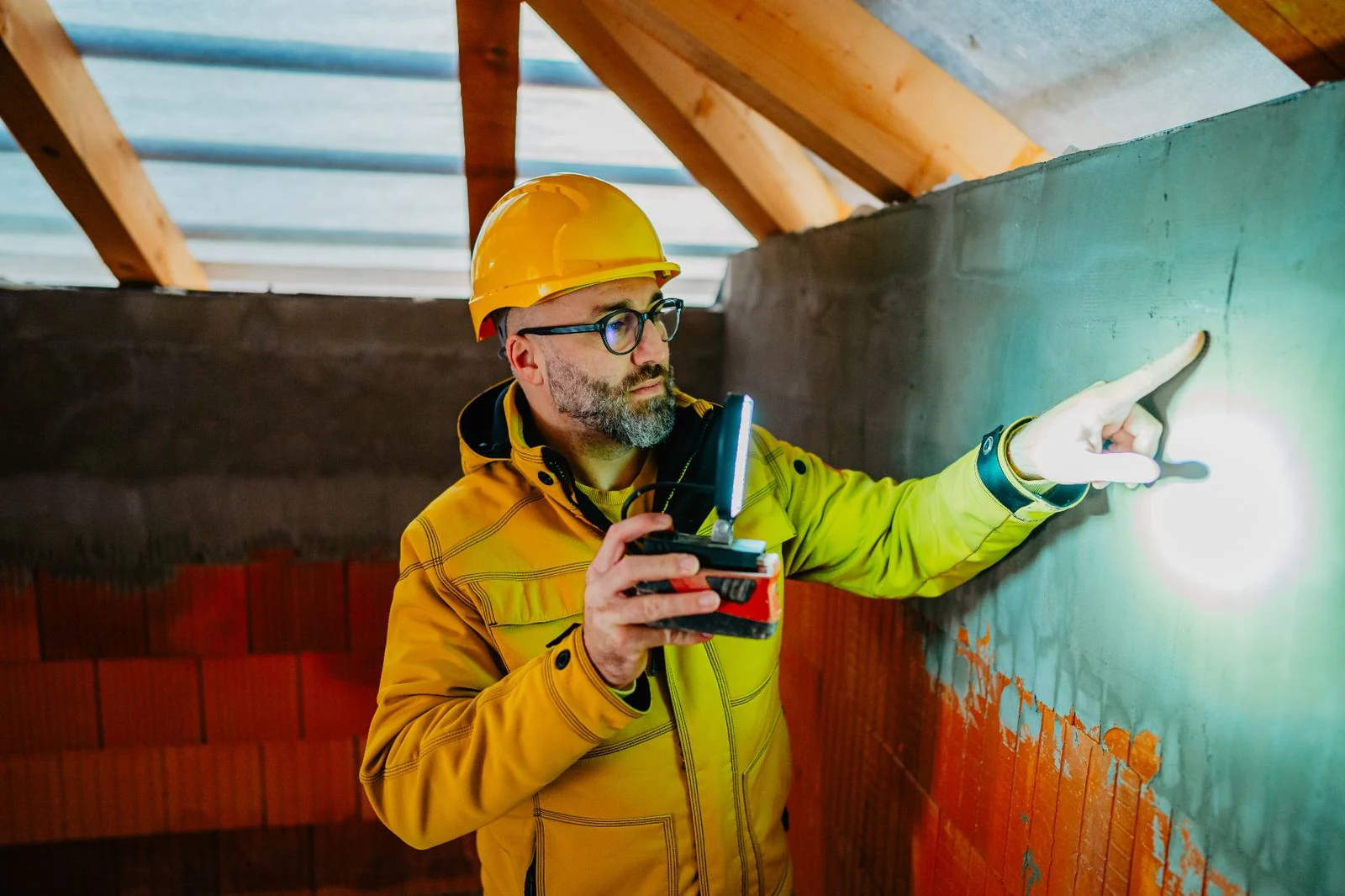
 Josef BenešConstruction Manager with 20+ years of experience
Checking contractors does not mean standing behind them all day. What matters is knowing what was agreed, identifying the moments when an inspection is useful, and recording important work before the next layer hides it.
On a self-build, you do not need to judge every pipe, cable or technical detail yourself. You need a practical system that keeps the brief, changes, photos and unresolved points connected to the work. It should also make clear when your own check is enough and when a qualified professional needs to look at the detail.
Start with a clear brief
Quality control begins before anyone arrives on site. If a contractor receives only a general instruction such as 'finish the bathroom', it will be difficult to decide later whether the result matches what both sides understood.
For important work, keep at least the basic scope in a form you can return to. State what should be done, where it should be done, which drawing, specification or product has been agreed, and which details matter. Note any exclusions or decisions that could otherwise be interpreted in different ways.
Not every small task needs a formal contract of its own. A usable brief is a shared reference point. If the work changes, the conversation can start with the agreed baseline rather than with two different memories.
You do not need to inspect everything
Self-builders often fall into one of two extremes. They either try to watch every step and spend most of the day on site, or they hand over the work and return only when it looks complete. Neither approach gives reliable control.
A better method is to identify inspection points in advance. These may include the completion of a defined stage, the moment before work is covered, a departure from the drawings, a handover between trades or the point at which a payment becomes due.
These moments matter because the cost and disruption of correction usually rise after the next trade has started. Some details also become impossible to see once finishes, concrete or other layers are in place.
Stop before concealed work is covered
Services disappear behind plaster and linings. Underfloor heating is covered by screed. Waterproofing sits below tiles. Reinforcement disappears into concrete. Once the next layer is complete, checking the work becomes slower, more expensive and sometimes destructive.
Create a simple rule for important concealed work: pause before covering it, check the agreed layout, take photographs and arrange a professional inspection where the technical risk justifies one. Make sure the contractor and following trade know that the inspection point is part of the plan.
The photographs remain useful even when the work is correct. Months or years later, they may show where a cable, pipe, membrane or fixing sits behind a finished surface.
A useful photo shows location as well as detail
A close-up of a joint may show an important defect, but it has limited value if nobody can tell where it is. For significant work, take at least one wider view that identifies the room or area, followed by the detail that needs to be checked.
Include a fixed reference where possible, such as a doorway, window, grid line or tape measure. Photograph the work before it is hidden, not only after a problem appears. If you need advice from someone who was not on site, the wider context will make the discussion much faster.
Photo documentation is not a substitute for technical inspection. It is a reliable way to show a qualified person what was visible at a particular moment.
Record changes when they happen
Construction work changes. You may move a socket, discover that the planned service route will not work, accept an alternative detail or revise a product. The change itself is not necessarily a problem. An undocumented change is.
For any significant revision, record what changed, where it applies and why. Attach a marked-up photo or revised drawing where useful. If the change affects price, sequence or completion, record that separately rather than allowing the original brief to be silently overwritten.
This protects more than the budget. The as-built condition may no longer match the original drawings, so the change record becomes part of the information you will need later.
A task must still make sense weeks later
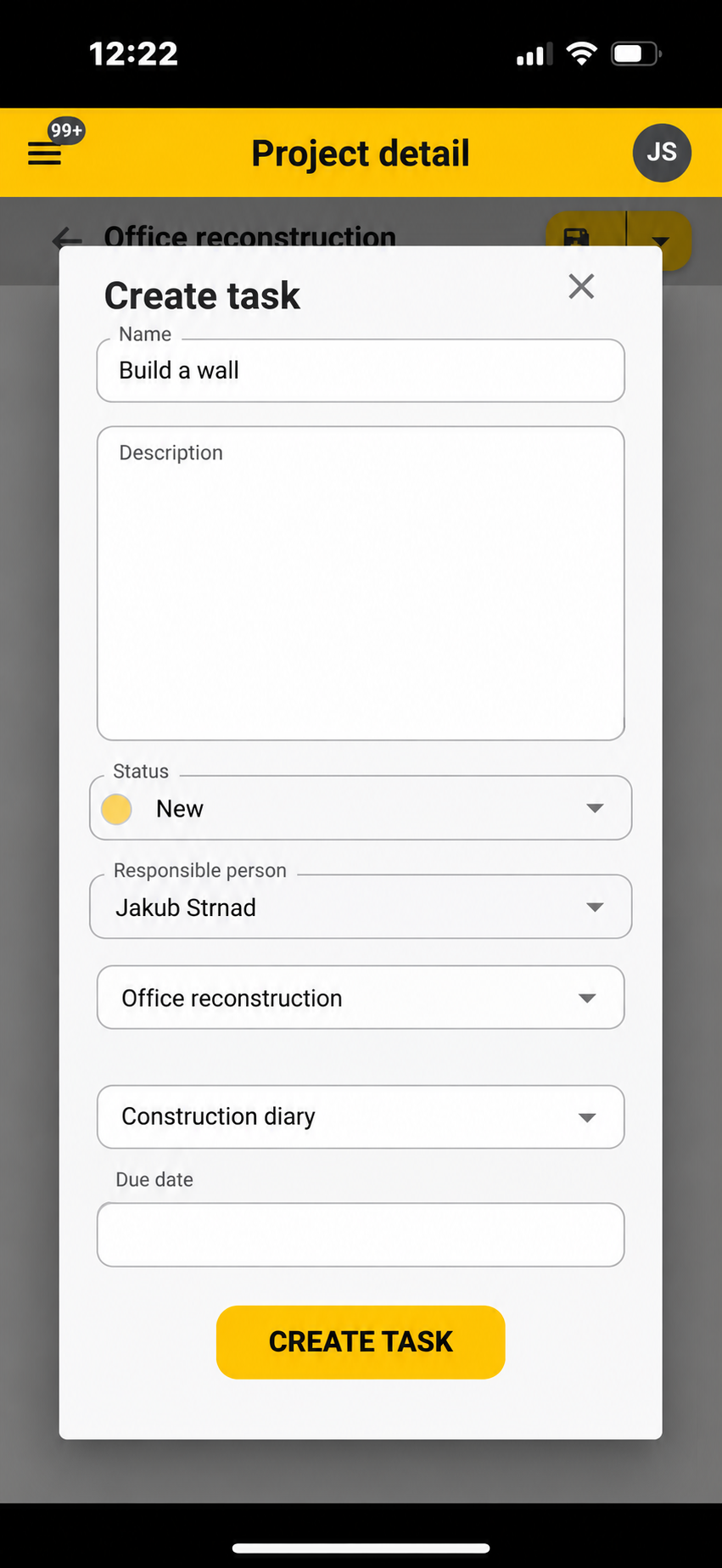
'Fix the bathroom' may feel clear during a conversation on site. Two weeks later, it may not. A useful task identifies the exact location, describes the required result, assigns responsibility and sets a realistic date or dependency. A photo can remove the last piece of ambiguity.
Keep the task with the relevant project so the person responsible can see the same context as the person who raised it. If the work changes or a question arises, add the update to the same record instead of starting a separate conversation that will be difficult to find later.
Check the task result, not only the activity
A task should describe the outcome you expect. 'Build a wall' is a start, but the useful details may include the location, drawing, dimensions, openings, finish, interfaces with other trades and the point at which the work must be checked.
When the contractor marks the task complete, compare the actual result with that outcome. A status change in software does not prove that the work is technically correct or formally accepted. It simply tells you that the task is ready for the next check.
Know what you can check yourself
You can compare completed work with the agreed brief, identify visible omissions, confirm that a requested change was followed, check whether an area is ready for the next trade and make sure concealed work has been documented. These are practical project checks that do not require you to pretend to be a specialist.
Technical judgement is different. A detail may look acceptable while failing a product instruction, design requirement or local standard. The opposite is also possible: an unfamiliar but correct solution may look wrong to a non-specialist.
If the issue affects structure, waterproofing, fire safety, electrical or gas work, energy performance, critical services or another regulated area, use a suitably qualified local professional. It is usually more valuable to ask before the detail is covered than after the next stage is complete.
Inspect against the agreed work, not a general impression
'It looks fine' is reassuring, but it is not a complete inspection. Return to the scope and the relevant drawing or specification. Has the full area been completed? Are there visible defects or unfinished edges? Were approved changes included? Is the work ready for the next trade? Have you recorded the parts that will no longer be visible?
This produces a clearer decision than searching the whole project for unspecified faults. If the work matches the agreed result, you also have a defined point from which the next stage can proceed.
Do not leave important feedback in a phone call
A call is often the quickest way to solve a site issue. The problem is that little remains after it ends. For an important defect, omission or change, keep a short written follow-up that states the location, the issue, the expected action, the responsible person and the agreed timing.
The note does not need to become a formal report every time. It needs to be findable. When the issue is resolved, close the task and retain the history. If it is not resolved, you have a specific basis for the next conversation.
Inspection rights depend on the contract and local law
The right to inspect work during construction, request correction or withhold approval is governed by the contract and the law that applies where you are building. Requirements vary between countries, and this article is not legal advice.
The practical lesson is to define access, inspection points, notice periods, approvals and the handling of defective work before the project reaches a disagreement. Do not assume that a photo, task status or unilateral note replaces a contractual notice or acceptance procedure.
A simple inspection routine
You do not need a complicated quality system for every trade. A short routine is easier to maintain throughout the build.
- Before work starts: confirm the scope, drawings, products, responsibilities and inspection points.
- During the work: record important changes and photograph concealed details before they are covered.
- At the inspection point: compare the result with the brief and involve an expert where technical judgement is required.
- After the check: record outstanding actions, responsibility and timing, then confirm when the issue has been resolved.
- Before payment or handover: review the completed scope, approved changes, defects, evidence and any required certificates or test results.
Where Stavario helps
Stavario does not decide whether a technical detail is correct. It helps keep the information needed for a useful check with the same construction project: tasks, photos, documents, comments and the history of what changed.
That means you can return to a decision made weeks earlier without reconstructing it from messages, a phone gallery and handwritten notes. If you need expert input, you can share the actual site evidence instead of trying to describe an unfamiliar detail over the phone.
Good checking is not the same as mistrust
A self-build involves several trades, handovers and decisions that affect later work. Checking the agreed result at the right moment helps everyone. The contractor receives clearer instructions, the next trade starts from a known condition and the client can raise questions while the work is still accessible.
The aim is not to catch people out. It is to prevent information and defects from disappearing under the next layer.
You do not need to stand behind contractors all day
Keep the brief, tasks, photos and important decisions with the build. Then focus your attention on the moments when checking can still change the outcome.
Frequently asked questions
Can I inspect a contractor's work while it is in progress?
Your rights and the correct procedure depend on the contract and local law. Agree access and inspection points before work starts, and follow any notice or approval process in the contract. For a legal dispute, seek advice in the country where the project is located.
What can I reasonably check myself?
Check the work against the agreed scope, confirm what has been completed, note visible defects or omissions, record approved changes and photograph important work before it is covered. Leave specialist technical assessment to a suitably qualified person.
When is the best time to photograph construction work?
Photograph concealed structures and services before they are covered, at the completion of an important stage, when the work departs from the drawings and when you identify a defect or unfinished item. Take both a wider location view and the relevant detail.
How should I record a problem with contractor work?
Identify the exact location, describe the problem and the expected result, attach a photo where useful, assign responsibility and record the agreed date or next step. Keep the follow-up with the same project record.
When should I bring in a construction professional?
Ask for qualified help when you are unsure about technical compliance, when the issue affects a critical or regulated part of the build, or before important work is permanently covered. An early review is usually more useful than an assessment after finishes are complete.
Related articles
What to Photograph During House Construction Before It's Covered Up
Document concealed installations and important construction details.
Read moreHow to Keep a Construction Diary When Building Your Own Home
Keep daily progress, photographs and important decisions with the build.
Read moreContractor Work Handover Checklist: What to Inspect and Document
Review completed work, defects and documents before handover.
Read more