 Josef BenešConstruction Manager with 20+ Years of Experience
When you're building your own home, keeping a construction diary can easily fall to the bottom of your to-do list. First, a delivery arrives. Then the electrician calls. A design detail needs to be discussed. By the evening, you realise you still haven't recorded what happened on site.
But catching up on several days of work is what makes construction documentation unnecessarily difficult. If you make daily records part of your normal building routine, keeping a diary becomes a matter of recording a few useful facts rather than trying to reconstruct events from memory.
Building Your Own Home Doesn't Mean Doing Everything Alone
Managing your own home-building project doesn't mean you have to supervise every technical detail yourself.
Even if you carry out some of the work personally, certain activities may require qualified professionals, inspections or independent supervision. The requirements depend on your country, region, type of construction and applicable building regulations.
For example, electrical installations, structural work and other safety-critical activities may need to be performed, inspected or approved by appropriately qualified professionals.
Your construction diary should help you maintain an accurate record of these activities, but it doesn't replace professional supervision or required inspections.
Before starting construction, check the local rules governing owner-builders, construction documentation, site supervision and responsibility for building work.
Who Should Keep the Construction Diary?
There doesn't necessarily need to be one person responsible for writing down everything that happens on site.
Depending on how your project is organised, information may come from the homeowner, main contractor, site manager, specialist tradespeople or other professionals.
The important thing is to agree who is responsible for maintaining the record and making sure important events are documented.
If a specialist carries out an inspection, the relevant professional should provide the appropriate findings or documentation. If you receive a material delivery, approve a change or photograph completed work, you may have useful information to add.
However, where local regulations or contracts specify who must maintain or sign official construction records, those requirements take priority.
Set Up Your Construction Diary Before Work Begins
Before making your first daily entry, collect the basic information about your project.
This might include the project address, relevant contacts, contractors, design documents, permits or approvals, and other important records.
The exact information required depends on the project and local regulations.
Keeping these details together makes everyday documentation much easier.
Instead of searching through emails, folders and messages whenever you need information, you have a clear reference point for the entire project.
A digital construction diary can make this especially convenient by connecting daily records with photographs, documents and tasks.
What Should You Record During the Day?
You don't need to spend the entire day thinking about how to write your evening report.
Focus on information that would be difficult to reconstruct later.
Record who worked on site, what was completed, how the project progressed, relevant weather or site conditions, important deliveries, inspections, problems and decisions.
If something changed from the original design, make sure that change is documented.
Many of these details already arise naturally during construction. You take photographs, receive materials, discuss tasks and communicate with contractors.
A good documentation system helps you bring these records together rather than entering the same information repeatedly.
Take Photos While Work Is in Progress
Photographs are one of the simplest ways to document a home-building project.
But don't wait until a room is finished.
Some of the most valuable photographs show work that will soon be hidden.
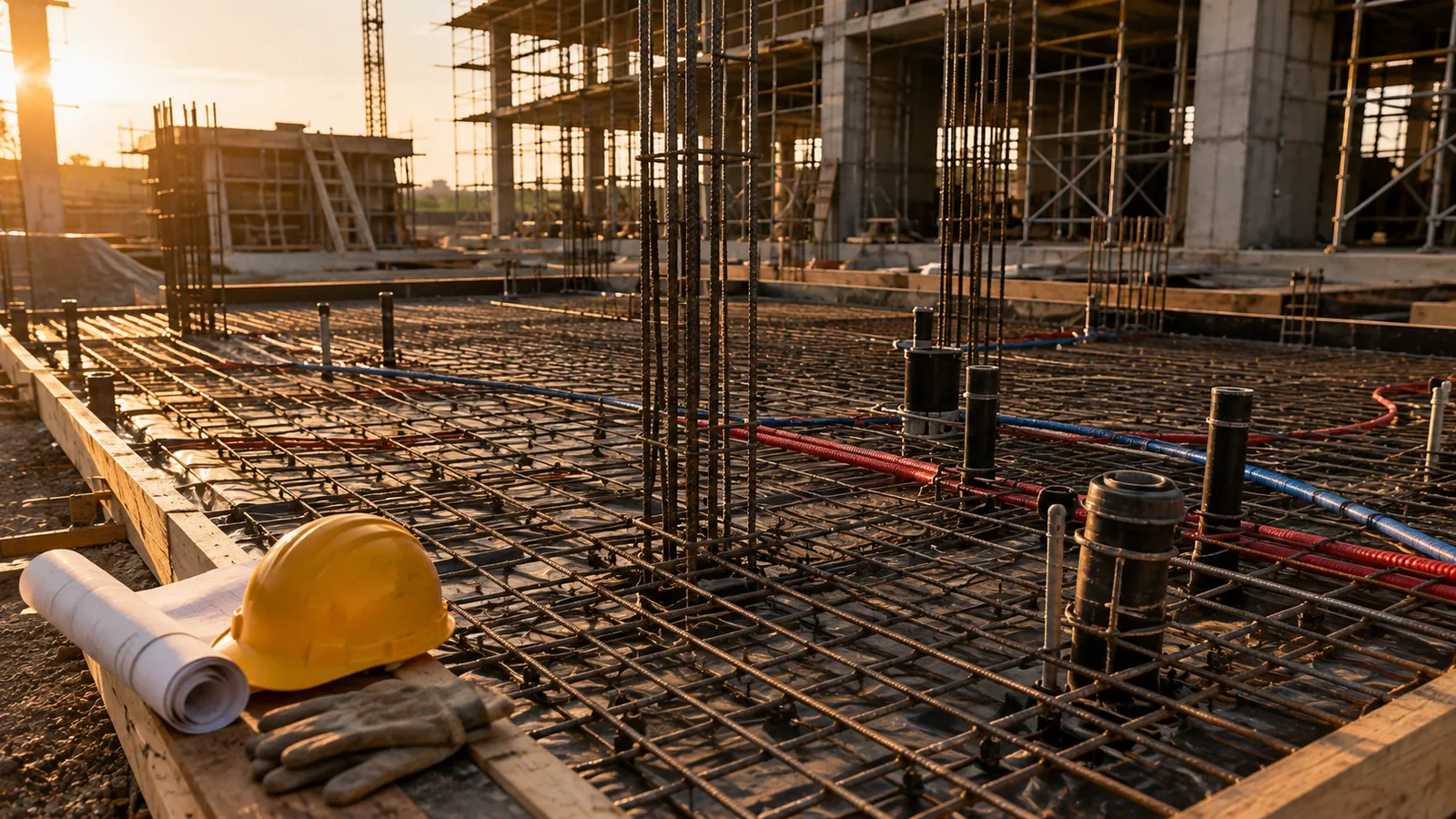
Examples include electrical cables before walls are closed, plumbing before plastering, underfloor heating before the floor is poured, waterproofing before additional layers are installed and reinforcement before concrete placement.
These photographs can help explain what was actually built, especially when combined with drawings, inspection records and daily notes.
Ideally, every important photograph should be associated with the correct project, location and date.
Photographs are useful supporting evidence, but they do not replace required technical documentation, testing or professional inspections.
Record the Day Before You Forget the Details
The longer you wait, the harder it becomes to remember exactly what happened.
After one day, you can usually recall which contractors were present and what was completed.
After a week, you may need to search through messages and photographs.
After a month, you might struggle to remember whether a particular change happened before or after an important construction stage.
That's why recording progress as soon as practical is a good habit.
Where local regulations or contractual requirements specify how frequently construction records must be completed, follow those rules.
For everyday project management, a short entry made at the end of the working day is often a practical approach.
A Simple Daily Construction Diary Routine
You don't need a complicated administrative process.
At the end of each working day, review what changed since the morning.
Check whether you've documented the completed work, people involved, relevant conditions, material deliveries, changes, inspections and important photographs.
On a straightforward day, a short entry may be enough.
If there was an inspection, design change, construction defect or important decision, include more detail.
The goal isn't to write a particular number of sentences. It's to create a record that someone can understand months or years later.
Common Mistakes to Avoid
One of the biggest mistakes is assuming you'll remember everything and complete the diary later.
Another is writing entries that contain almost no useful information.
Statements such as "work continued", "construction activities" or "everything was fine" provide very little context.
Instead, describe what was actually done, where it happened and whether anything important changed.
Avoid emotional comments or vague descriptions of disagreements.
If a problem occurs, record the facts, relevant circumstances, agreed actions and next steps.
The clearer the entry, the more useful it becomes later.
How Stavario Can Help
Stavario brings construction diary records together with other information about your building project.
Instead of keeping photographs in your phone gallery, documents in emails and daily notes somewhere else, you can organise them within the same project.
Depending on the available AI features, you may also be able to use existing photographs and other project information to help prepare a draft daily record.
This doesn't mean AI takes responsibility for the accuracy of your construction diary.
It simply means you don't always have to start from a blank page.
Always review generated content and correct or complete it according to what actually happened on site.
A Construction Diary Becomes Easier When You Keep It as You Build
The best construction diary isn't necessarily the longest one.
It's the one that is maintained consistently and remains useful when you need to look back.
Building your own home already involves enough decisions and responsibilities.
Recording important information while it is still fresh can save considerable time later.
Over time, your photographs, notes, documents and decisions become a practical history of the entire project.
A construction diary then becomes more than an administrative task. It becomes a reliable record of how your home was built.
Document Your Project as It Happens
With Stavario, you can keep construction diary entries, photographs and important documents connected to one project.
Instead of reconstructing the building process from memory, you can create a clear project history as construction progresses.
Frequently Asked Questions
Related articles
Construction Diary Example: What to Include in a Daily Site Log
See a completed daily entry and what a useful site log records.
Read moreConstruction Diary vs. Simple Building Log: What Do You Really Need?
Compare a detailed construction diary with a simple building log.
Read moreWhat to Write in a Construction Diary Every Day
Seven things to record daily, a practical example and a checklist.
Read more