 Josef BenešConstruction Manager with 20+ Years of Experience
Not every construction project needs the same level of documentation. Building a family home, renovating a bathroom and managing a large construction site involve very different amounts of work, people and decisions.
But how much should you actually record?
A detailed construction diary and a simple building log can both help you keep track of progress. The difference lies in how much information they capture and what you need those records for.
There is also an important distinction between practical project documentation and records required by law. Requirements vary between countries, regions and project types, so always check the rules that apply to your construction project.
What Is a Construction Diary?
A construction diary is an organised record of what happens during a building project.
It typically captures daily activities, people working on site, completed work, relevant conditions, material deliveries, inspections, changes and significant events.
Rather than simply recording that construction continued, it provides enough information to understand how the project progressed.
For example, a useful entry might describe which walls were completed, which contractors were present, what materials arrived and whether any changes were made to the original plans.
Over time, these entries create a chronological history of the construction process.
This can be useful when reviewing completed work, checking decisions, discussing problems or understanding what happened during an earlier stage.
Depending on the country and project, formal construction diaries or equivalent site records may also be subject to specific legal, contractual or professional requirements.
What Is a Simple Building Log?
A simple building log is a less detailed way of documenting construction progress.
Instead of recording every activity, it focuses on the main developments and important events.
For example, a homeowner renovating part of a house might record when demolition started, when electrical work was completed, when materials arrived and when an inspection took place.
A simple log can also include photographs, notes about changes and information about contractors.
The purpose is to maintain a useful project history without creating unnecessary administration.
However, "simple building log" is used here as a practical description, not as a universally recognised legal document.
Some countries have specific names and requirements for simplified construction records. Others may require different types of documentation or may not recognise this distinction at all.
A personal building log should never be assumed to replace any official records required for the project.
Construction Diary vs. Simple Building Log: The Main Differences
Both approaches help document the building process, but they serve slightly different practical needs.
| Construction Diary | Simple Building Log |
|---|---|
| More detailed record of construction activities | Summary of major activities and events |
| Often updated after each working day | Updated when relevant work or events occur |
| Records contractors, work progress, deliveries and conditions | Focuses on milestones, decisions and important changes |
| Can support coordination across multiple trades | Useful for keeping track of a smaller project |
| May form part of formal project documentation where applicable | Primarily a practical record unless local rules provide otherwise |
The important point is that the amount of documentation should reflect the complexity of the project and any applicable requirements.
A small renovation may be manageable with a simple record. A new home involving multiple contractors, inspections and construction stages usually benefits from more detailed documentation.
Does Every Building Project Need a Construction Diary?
Not necessarily.
The answer depends on where you are building, what type of work is being carried out and which rules apply.
Some countries require formal construction records for certain types of projects. Others place documentation responsibilities on licensed contractors, site managers or other qualified professionals.
Permits, contracts and inspection requirements can also affect what needs to be recorded.
For example, a new residential building may have different documentation requirements from a minor home improvement project.
Before choosing how to maintain your records, check:
- Local building regulations
- Permit and approval conditions
- Requirements for professional supervision
- Responsibilities defined in construction contracts
- Inspection and completion documentation requirements
If you're unsure, ask the relevant local authority or a qualified construction professional.
The practical recommendations in this article do not replace those requirements.
Why a New Home Usually Benefits From Detailed Records
Even where a detailed construction diary isn't legally required, it can be extremely useful when building your own home.
A house involves many construction stages that depend on one another.
Foundations are completed before walls are built. Electrical and plumbing installations are installed before surfaces are finished. Insulation and structural details may disappear behind permanent layers.
Once work is covered, it becomes much harder to check exactly how it was completed.
A construction diary helps connect the different stages.
You can record when work was carried out, who was involved, what changed and which photographs or documents relate to that stage.
This is particularly useful when several contractors work on the same project at different times.
What Should a Good Construction Diary Include?
A useful construction diary doesn't have to be complicated.
For most projects, the following information provides a practical starting point:
- Date and relevant site conditions
- Contractors or workers involved
- Work completed and areas affected
- Important material deliveries
- Equipment used where relevant
- Inspections, tests and professional checks
- Changes from the original plans
- Problems, delays or unexpected events
- Decisions and agreed next steps
- Supporting photographs and documents
The level of detail should match the work being carried out.
A routine day may need only a short entry. A major structural operation, important inspection or design change may require more detailed documentation.
Where official records are required, follow the applicable format and content requirements.
When Is a Simple Building Log Enough?
For smaller projects, a simple log may be a practical way to stay organised.
Imagine you're renovating a room, replacing interior finishes or carrying out minor improvements.
You might want to record the start and completion dates, materials used, contractors involved and any changes made during the work.
Photographs before and after important stages can provide additional context.
This may be sufficient for your own project management needs.
However, whether it also satisfies any formal documentation requirements is a separate question.
Even relatively small projects can involve regulated work, particularly where structural elements, electrical systems, plumbing or other safety-related installations are affected.
Always confirm which inspections and records are required locally.
How Often Should You Update Your Records?
A detailed construction diary is most useful when entries are made regularly.
Recording work at the end of each working day helps preserve accurate information while events are still fresh.
A simple building log may be updated less frequently, depending on the pace and complexity of the project.
For example, you might add an entry whenever an important stage is completed, a contractor visits, an inspection takes place or a significant decision is made.
The main risk is leaving documentation until the end of the project.
After several weeks, remembering exact dates, conversations and changes becomes much harder.
If formal records are required, follow any applicable rules concerning recording frequency, responsibility and approval.
Can You Keep Construction Records Digitally?
Yes, digital tools can make construction documentation easier to organise and retrieve.
Instead of keeping written notes in one place, photographs in another and project documents in separate folders, you can connect them to the same construction project.
This makes it easier to find information about earlier stages.
For example, if you need to check where plumbing was installed before a wall was closed, photographs linked to the relevant construction stage may be much more useful than searching through thousands of images on your phone.
Digital records can also help when sharing information with contractors or other professionals.
However, using a digital tool doesn't automatically mean your documentation satisfies every legal requirement.
Some jurisdictions or contracts may specify particular formats, signatures, access arrangements or record-retention procedures.
Check these requirements before relying on a digital system for official documentation.
How Stavario Helps You Document Construction Progress
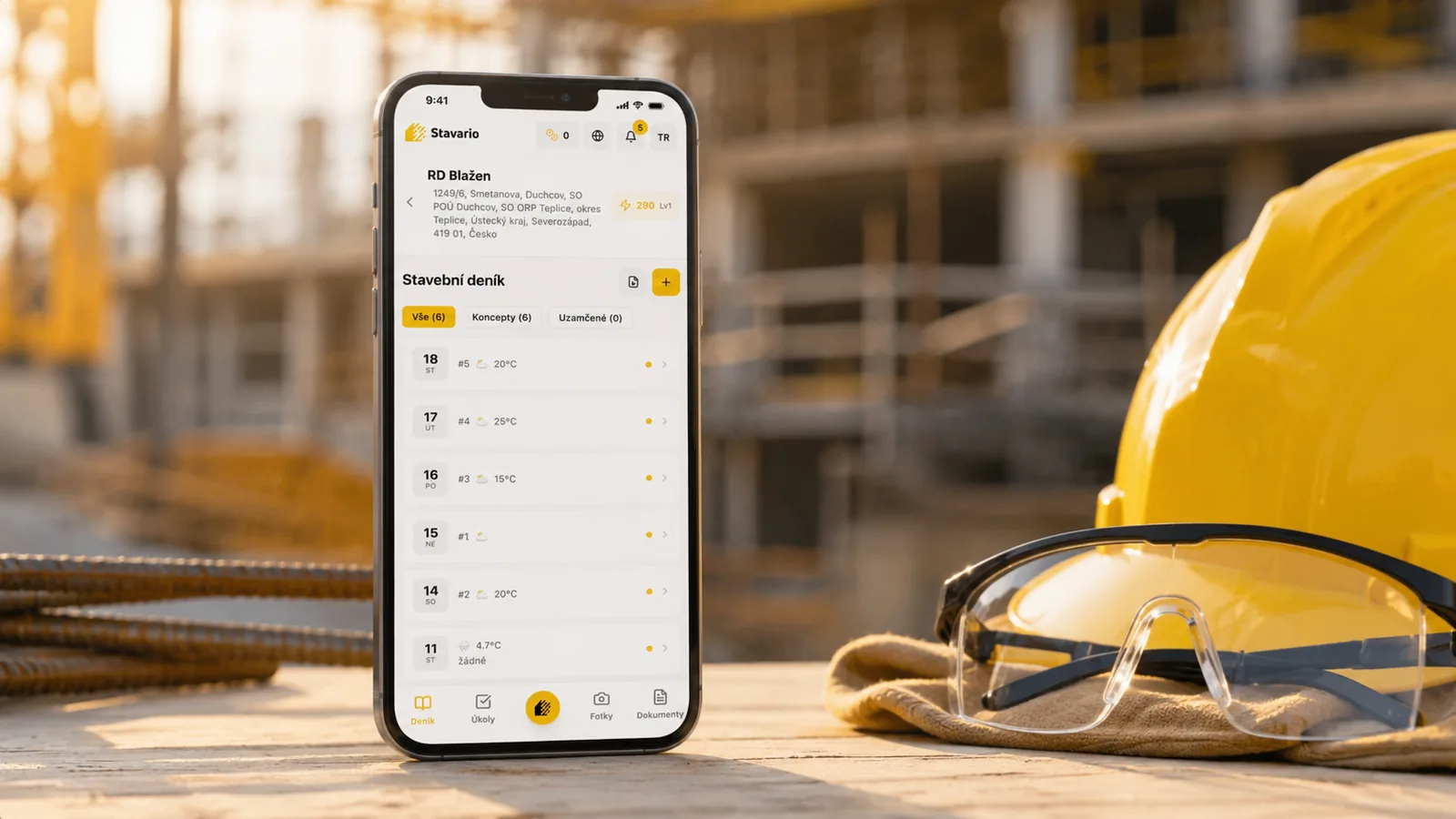
Stavario brings construction diary entries, photographs, documents and tasks together within one project.
This can help you create a clearer history of your home as construction progresses.
Instead of trying to remember which photographs belong to which construction stage, you can keep relevant information connected to the project.
Depending on the available AI features, existing photographs and project information may also help prepare draft diary entries.
Any AI-generated content should always be reviewed and corrected against what actually happened on site.
Stavario helps organise project information, but it does not replace required professional inspections or determine which documentation is legally necessary in your location.
The Best Record Is One You Can Actually Maintain
A detailed construction diary and a simple building log have something important in common.
Both are useful only when the information is accurate, organised and recorded while it is still relevant.
Creating hundreds of entries that contain almost no information isn't particularly helpful.
Neither is keeping a handful of vague notes that leave you guessing what happened.
The right approach is to document enough detail to understand the progress of your project, while meeting any formal requirements that apply.
Whether you're managing a small renovation or building an entire home, good records make it easier to understand what has been completed, what has changed and what still needs attention.
Keep Your Construction Records in One Place
Whether you're maintaining a detailed construction diary or organising practical building notes, Stavario helps you keep photographs, documents and construction progress connected to your project.
Create a clearer history of your build without searching through scattered files and messages.
Frequently Asked Questions
This article provides general practical information about construction documentation. It does not replace local building regulations, contractual obligations or professional advice.
Related articles
How to Keep a Construction Diary When Building Your Own Home
Keep daily progress, photographs and important decisions with the build.
Read moreConstruction Diary Example: What to Include in a Daily Site Log
See a completed daily entry and what a useful site log records.
Read moreWhat to Write in a Construction Diary Every Day
Seven things to record daily, a practical example and a checklist.
Read more